Child Hood: The Authentic Font for Creative Branding
Last week, I was helping a friend who runs a beautiful little bakery. She was agonizing over her new cupcake box labels. The design was lovely, but the font she had picked felt stiff and corporate. "It just doesn’t look like me," she sighed. Her brand is all about warmth, handmade care, and a touch of playful nostalgia. We needed something that felt personal, not prefabricated. That’s when I suggested trying the Child Hood font. The transformation wasn’t just a design change; it was a brand revelation.
How Child Hood Creates Authentic Brand Personality
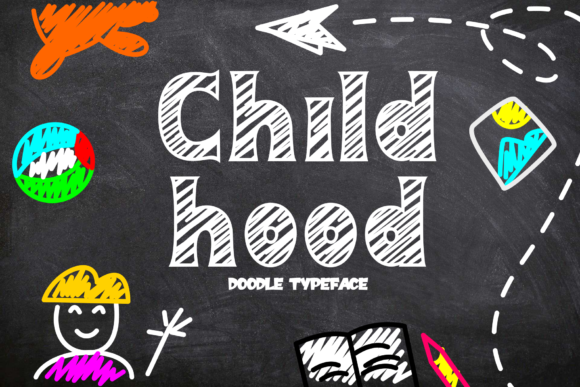
Child Hood is more than just a Display font; it’s a mood. This joyful and fun duo font display and dingbats typeface has a uniquely authentic look and feel. It doesn’t strive for perfect, digital uniformity. Instead, it captures the charming irregularity of real chalkboard lettering—the slight wobbles, the organic weight shifts, the friendly imperfections. This is its secret power for small businesses. When you use a font like Child Hood on your product labels or menu headers, it communicates honesty and approachability instantly. It says your business is human, crafted, and attentive to detail. For my baker friend, swapping that sterile typeface for Child Hood made her cupcake boxes look like they were lovingly labeled by hand, right in her kitchen. That personal touch is priceless in a market saturated with slick, impersonal packaging.
Using Child Hood Fonts for Product Labels and Packaging
The practical applications are vast. Because Child Hood is designed with an authentic chalkboard aesthetic, it excels anywhere you want to convey warmth and direct communication. Think about a candle seller redesigning their jar labels. Using Child Hood for the product name—like "Vanilla & Oak"—immediately gives it a cozy, artisan feel. The accompanying dingbats are a treasure trove for small icons: a little star for a "best seller," a simple heart for a "handmade" badge, or a tiny leaf for a natural ingredient hint. These dingbats integrate seamlessly, maintaining that cohesive, hand-drawn style without you needing to source separate graphics. For any physical product—from skincare jars to boutique clothing tags—this font adds a layer of tactile realism that customers connect with.
Child Hood for Consistent Social Media and Website Graphics
Brand consistency across platforms is a common headache for entrepreneurs. Child Hood fonts solve this elegantly. Its distinctive character becomes a visual anchor. When you use Child Hood for your Instagram story templates announcing a new product launch, and then use the same typeface for the banner on your online shop’s homepage, you create an immediate, recognizable link. Customers move from social media to your website and feel they’re in the same place. The font’s display style means it’s perfect for headlines and short, impactful phrases. It’s readable even on small mobile screens when used for a bold quote or a promotional offer, but it’s best kept to main titles rather than long body text. This makes it ideal for building a suite of branded graphics: YouTube thumbnails, Pinterest pins, email header images, and digital ad creatives all can share this unique typographic voice.
Designing Menus and Chalkboard Quotes with Child Hood
The product description hits the nail on the head: Child Hood can be used for all chalkboard quotes or teaching material. For a café refreshing its menus, this is a game-changer. A menu header like "Today’s Specials" written in Child Hood feels inviting and fresh, as if it was just scribbled onto a chalkboard behind the counter. It breaks away from the clinical feel of many menu typography choices. Similarly, for a creative consultant or coach, using Child Hood for key quotes on website hero sections or presentation slides adds a relatable, human-scale energy to your message. It’s a font that feels like it’s speaking to you, not broadcasting at you. This is the subtle difference that turns generic communication into engaging brand conversation.
Professional Polish and Font Pairing with Child Hood
One might worry that such a playful font could undermine professionalism, but the opposite is true. When used strategically, Child Hood lends a sophisticated cohesion. The key is pairing it correctly. A font like Child Hood, being a distinctive display typeface, should be the star. Pair it with a very clean, neutral sans-serif font for all your supporting text—the ingredient lists, the pricing details, the longer descriptions on your website. This combination creates balance: the personality and charm come from Child Hood, while the clarity and structure come from the simple sans-serif. This approach makes your entire brand look thoughtfully designed, not just decorated. Before using any font commercially, always check its licensing. For a font like Child Hood, ensure the license covers commercial use for products and packaging so you can apply it to your physical goods and digital templates confidently.
In the end, my baker friend’s new labels arrived. The Child Hood font, with its joyful bounce and authentic feel, turned her packaging into a brand statement. It looked polished, consistent, and utterly memorable. It told her story before a customer even tasted a cupcake. For any small business owner, craftsperson, or online seller looking to infuse their brand with genuine personality, this duo font display and dingbats set isn’t just a design asset. It’s a shortcut to a brand identity that feels real, trusted, and delightfully human.